
The Impossible Ask
Why Even “Perfect” Portfolios Lose to the Market Half the Time

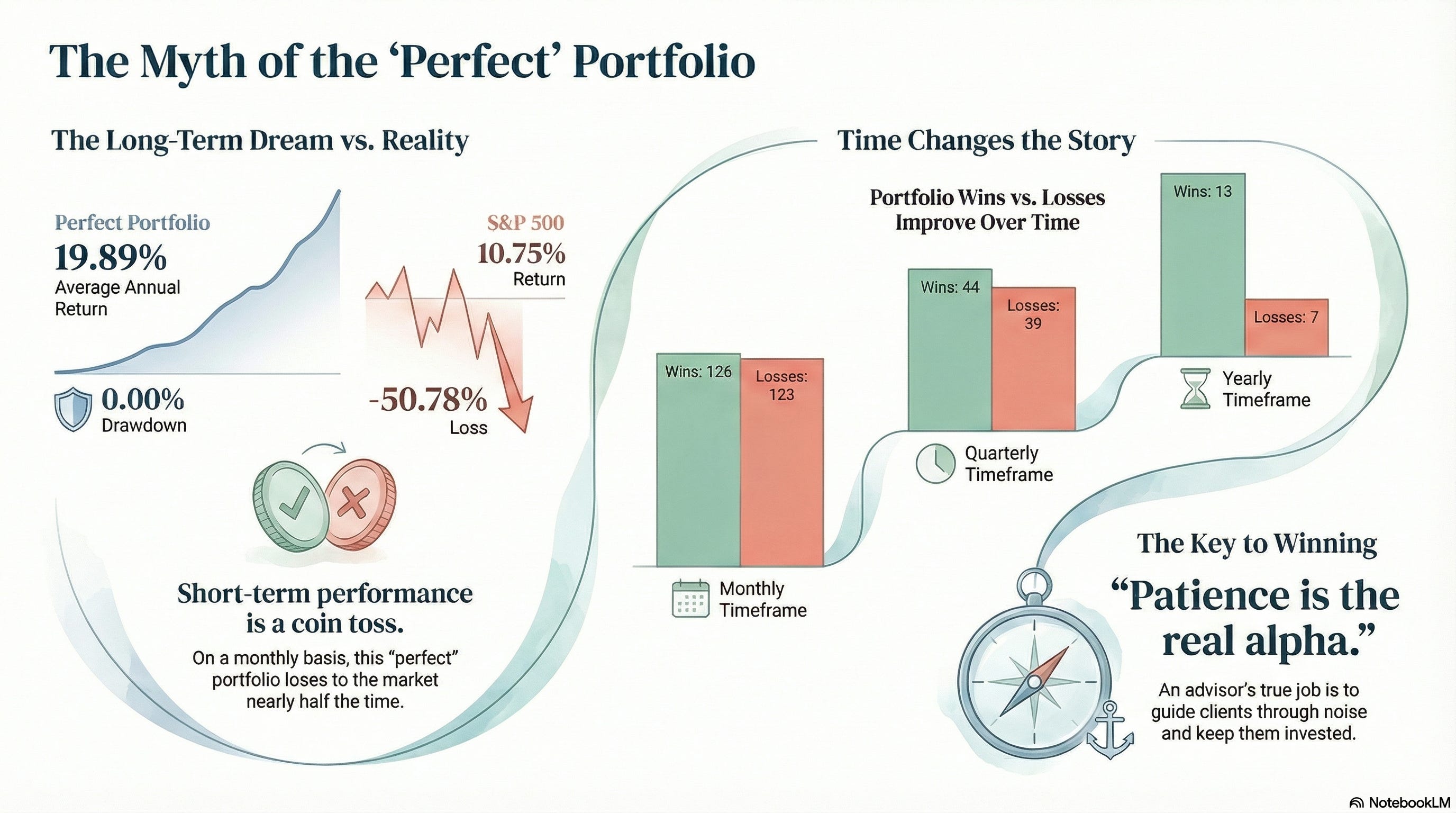
Every investor dreams of it: a portfolio that consistently outperforms the S&P 500 while avoiding painful drawdowns. Double the returns, zero losses, smooth sailing. Sounds perfect, right?
Here’s the catch—even the “perfect” portfolio doesn’t win every time.
The Myth of the Perfect Portfolio
Imagine a strategy that doubles the S&P 500’s return over a decade with no drawdowns. It looks flawless on a chart.
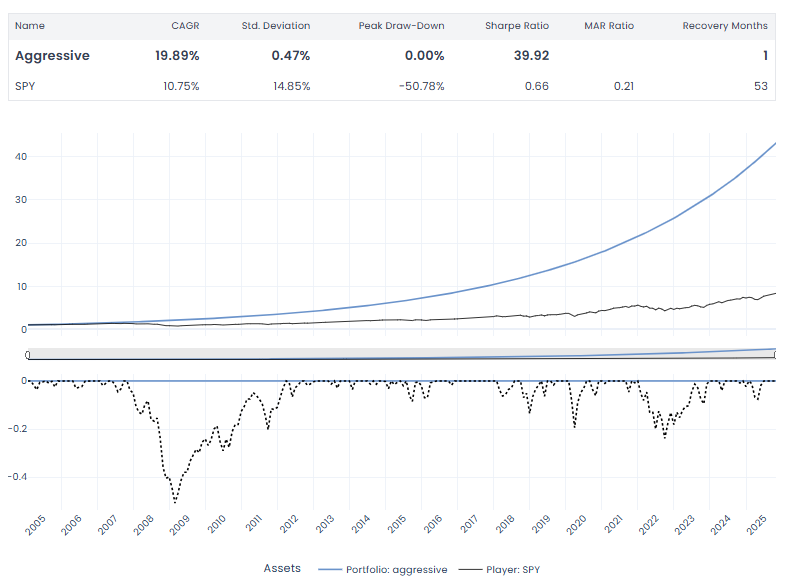
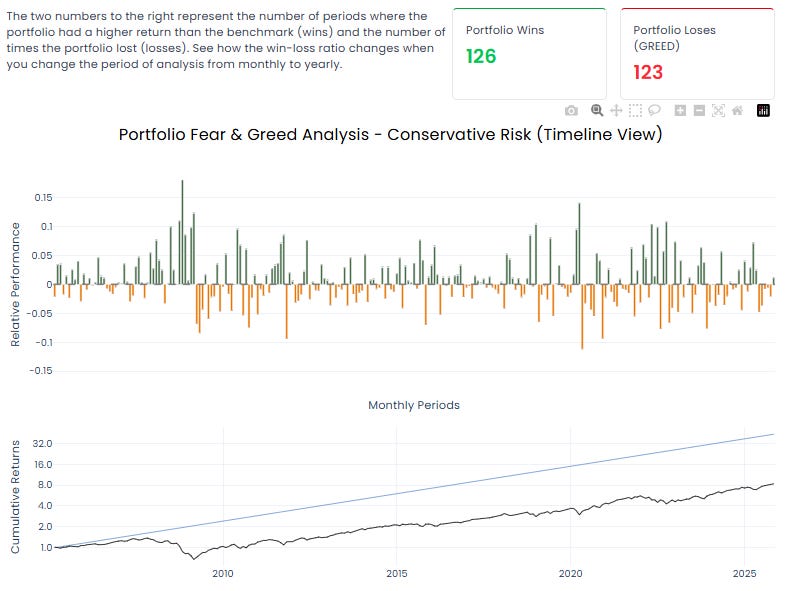
Yet when you zoom into the month-by-month results, that same portfolio still loses to the market nearly half the time.
The Investor’s Roller Coaster
This impossible ask—“beat the market every quarter”—is something advisors hear constantly. Some clients panic after a presidential tweet, demanding to move everything to cash. Others get frustrated when their portfolio doesn’t go all-in during a rally. Different moods, same impossible expectation: a roller coaster ride that only goes up.
When you break down even the so-called “magic portfolio” at the monthly level, the win-loss record is essentially a coin toss. 126 wins to 123 losses.
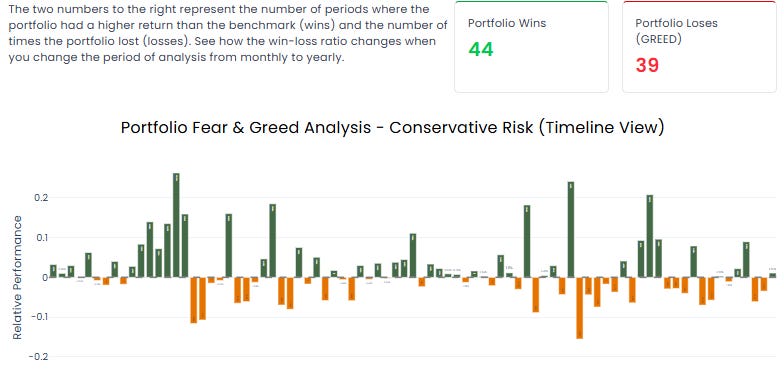
As the timeframe expands, the picture begins to improve. Here is the Quarterly data. 44 wins to 39 losses.
Here is the yearly picture: 13 wins to 7 losses.
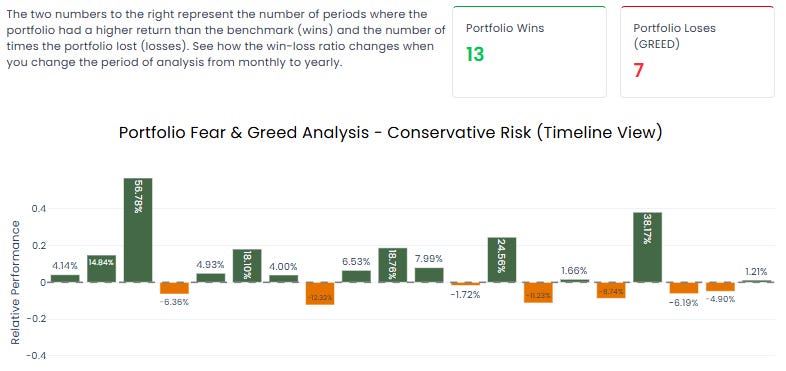
The Advisor’s Real Job
That’s why advisors aren’t just money managers—they’re also psychologists. Their challenge isn’t only about choosing the right allocations; it’s also about helping clients resist emotional overreactions. Keeping investors from jumping ship during a downturn—or piling in too late during a euphoric rally—is as critical as the portfolio construction itself.
The most effective advisors educate with data, not emotion. They show clients that even resilient portfolios don’t “win” every period. Over time, patience is what pays off.
Patience Is the Real Alpha
A ten-year view tells the story. Portfolios that manage risk, minimize drawdowns, and align with investors’ emotional tolerance profiles are the ones that deliver true long-term success. But that success only comes if investors stay invested—not if they jump in and out based on the latest headline.
Winning in the long run doesn’t mean winning every month. Or even every quarter. Investors often overlook that reality, especially when emotions run high and expectations get distorted.
The real job of an advisor isn’t to beat the S&P 500 every quarter. It’s to guide clients through the noise, keep them on the ride, and remind them that patience is the real alpha.
How does Darwin manage its run in the last 5 years? The video below drills down into some of the Darwin numbers.